Reading height: the pantry shelf, made legible
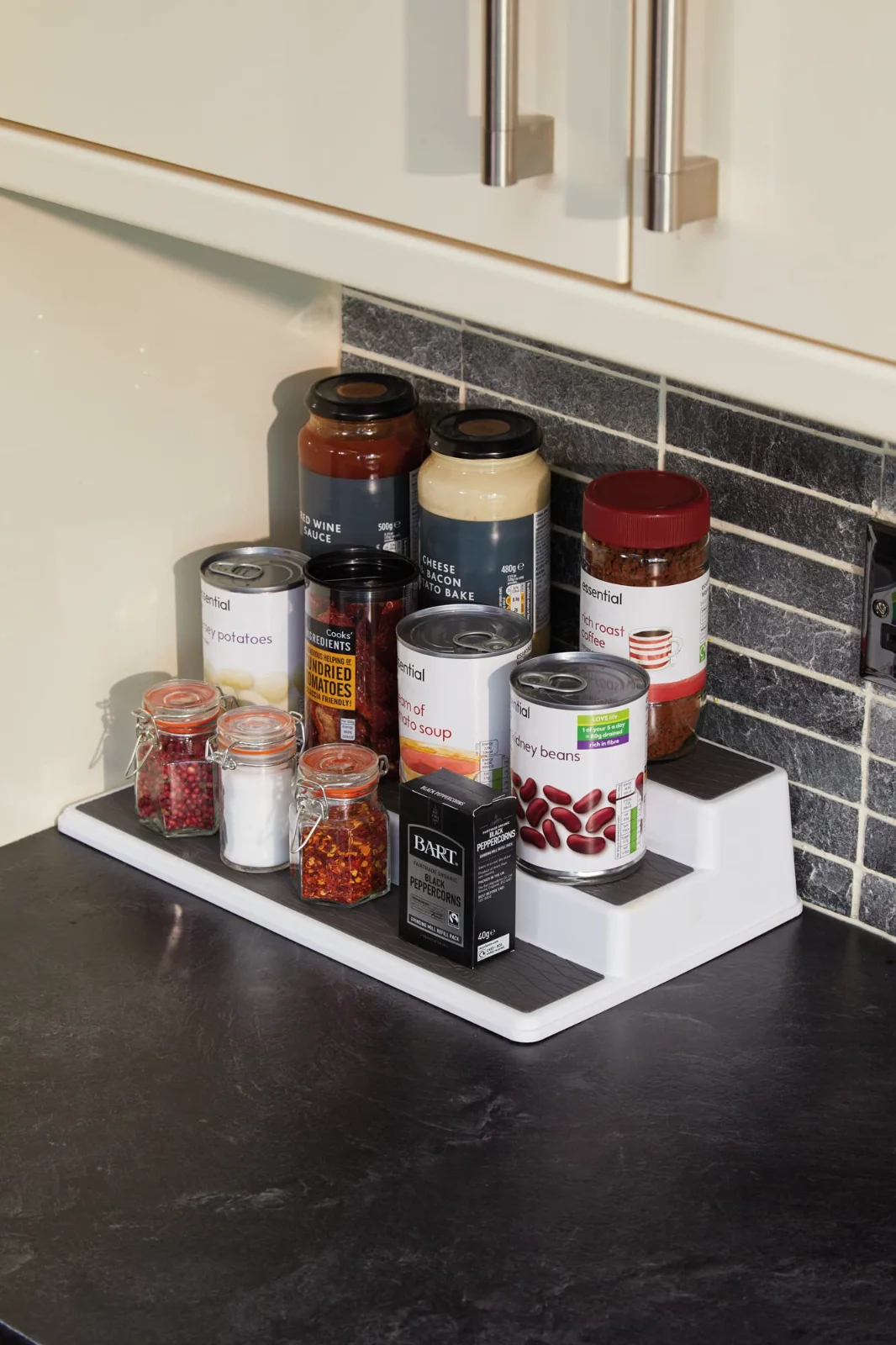
A straight shelf hides its own back rows, and the cinnamon starts impersonating the cumin. Three stepped tiers fix the reading problem, and the tape measure decides between ten inches and fifteen.
The front row problem
A standard pantry shelf presents its contents in a single plane, a flat stage where every item competes for the same narrow strip of visibility. You see the front row with perfect clarity: the half-empty jar of paprika, the nearly finished tin of baking powder. Behind them lies an archive of ingredients, their labels obscured by the very jars meant to be used first. This is not a failure of organization, but of geometry. The human eye reads a shelf from the front edge backward, and a straight line of identical heights creates a dead zone for anything not positioned on that leading edge. You are left with a system that relies on memory or a frustrating game of shuffling containers to find the coriander hiding behind the cumin. The average kitchen shelf, by its very design, encourages this visual clutter. It is a landscape without elevation, where nothing stands out. Think of the last time you removed six items to reach the one you needed. That is the front row problem in practice.
What a tier actually buys you
Introducing a tiered rack is not about adding storage, but about adding sight lines. The primary function is optical, not spatial. You gain no new square footage on the shelf itself. What you purchase is a structure that creates graduated levels, lifting the back rows of containers up and into your field of view. This solves the reading problem directly. Now a jar of olives in the back stands a step above the jar of capers in front of it, and both labels read at once without anything moving. The mechanism is simple: it uses vertical space, which is often wasted on a shelf, to create a topography of accessibility. Your pantry becomes a legible document instead of a flat file. You stop forgetting about the jar of artichoke hearts purchased for a specific recipe. It remains in place, yet it is no longer out of mind. The rack itself is merely a tool to re-engineer your existing space for better utility. Its value is measured in time saved and frustration avoided.
Measuring jar against shelf
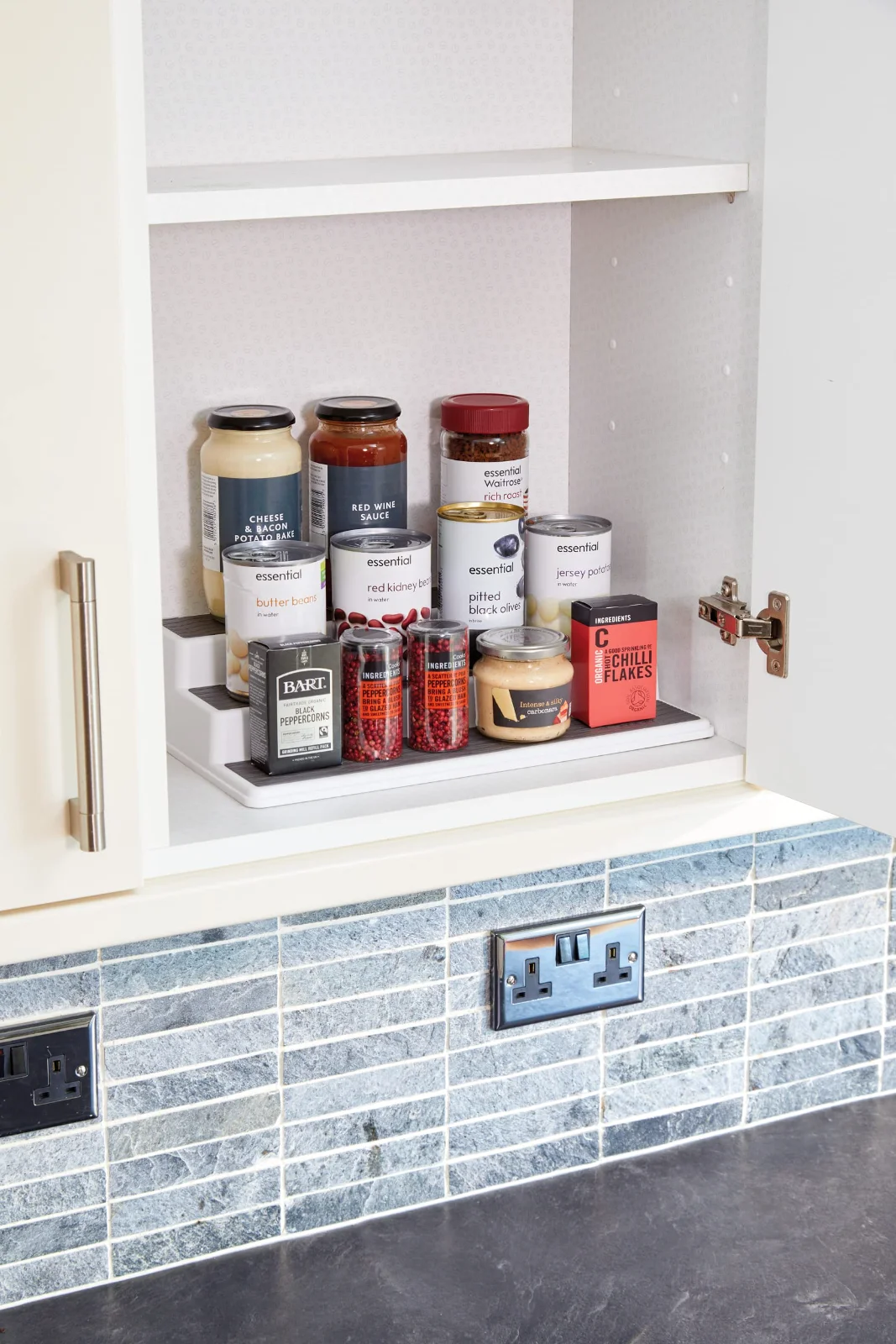
Before any rack is considered, you must perform a simple audit of your own domain. This is a two-part measurement, and neither can be skipped. First, establish the interior height between your shelf and the one above it. This is the absolute vertical space you have to work with. Second, gather the tallest containers you intend to store: the tall vinegar bottle, the oversized canister of oatmeal. Place the rack on your counter and set your tallest item on its highest step. The clearance between the top of that container and your upper shelf is your margin for retrieval. If it fits with room for your fingers, the system will work. If not, you require a rack with a lower profile or a shorter top step. This check is the single most useful action you can take to ensure a functional result. Guessing leads to a rack that fits the shelf but not your groceries, rendering the entire exercise pointless. The goal is effortless access, not a tightly packed puzzle.
Ten inches or fifteen
Racks are not one-size-fits-all, and the choice between a 10-inch or 15-inch model is a question of inventory and shelf depth. The 10-inch width is for the curated pantry and the narrow upper cabinet. You might use one for baking supplies alone. The 15-inch version provides a broader stage: standard grocery-store spice shakers stand about two rows deep on each of its tiers, and it swallows a whole spice collection at once. The decision hinges on what you need to see. A wider rack makes sense on a shelf deep enough to hold two rows of jars, because the tier brings the entire back row into view. For a shelf that is already shallow, the smaller unit prevents overhang and maintains stability. Your existing storage containers will dictate the correct answer.
When two racks beat one
A single rack organizes a category. Two racks organize a system. Their utility is not merely additive but multiplicative when used to create zones within a larger shelf. You might dedicate one 10-inch rack to baking flavors, vanilla to lemon extract, and a second to the savory shelf, paprika to cumin. That separates two kinds of cooking while keeping every label in view. Placing two identical racks side by side on a long shelf does something different: a continuous elevated field with no dead strip between them, which is why the 10-inch model sells in a pack of two. The expandable Pro set answers the shelf that is neither ten nor fifteen inches wide: pulled open, each rack runs to the width of the gap it lands in. Two racks also reconfigure as your needs change, and a unit moves from the spice shelf to the canned-goods shelf without ceremony.
Cans are not jars
A can is taller and heavier than a spice jar, and it changes the arithmetic rather than the idea. The tier clearance that comfortably takes a shaker may pinch a tall tin, so the jar-against-shelf check from earlier applies with more force here: measure the tallest can you actually buy, not the one in the photograph. Weight matters too. A row of cans is a load, and it belongs on the lower steps, where it also does the useful work of anchoring the rack. Loaded that way, a tiered rack reads a wall of cans the same way it reads a wall of jars: every label facing out, nothing hiding behind the beans.
The shelf that stays put
A rack that slides when you grab a jar from the back is worse than no rack at all. It introduces a new problem instead of solving an old one. Stability comes from two places: the weight of the loaded containers and the grip of the non-skid material on the rack's feet. The first is within your control, because a fully stocked rack is a stable rack. The second can be defeated by the environment. A thin, oily film from cooking aerosols can coat pantry shelves over time, creating a surface that behaves like ice. If a new rack slides, the fix is not to return the rack but to wipe the shelf with a damp cloth. This restores the necessary friction for the feet to grip. The rack will then stay in place through normal use. One customer found the non-skid steps so secure they repurposed a unit as a set of stairs for a cat with a balance disorder. For your pantry, the requirement is simpler: it must not move when you need it to be still.
The widths and tier counts across the Copco shelves are on every card, and the non-skid steps are the part you will stop noticing within a week.
One button, the whole Copco range
Every diameter, capacity and pack count in the Copco favourites sits behind this button, with the current price beside it. Measure your shelf, check the figure on the card, and it ships from our retail partner.