Sixteen ounces: choosing the mug you will still be washing next year
Most commuter mugs are not broken when they stop being used. They are abandoned. The lid, the wall, the handle and the dishwasher decide which fate yours gets, and each is worth thirty seconds of thought.
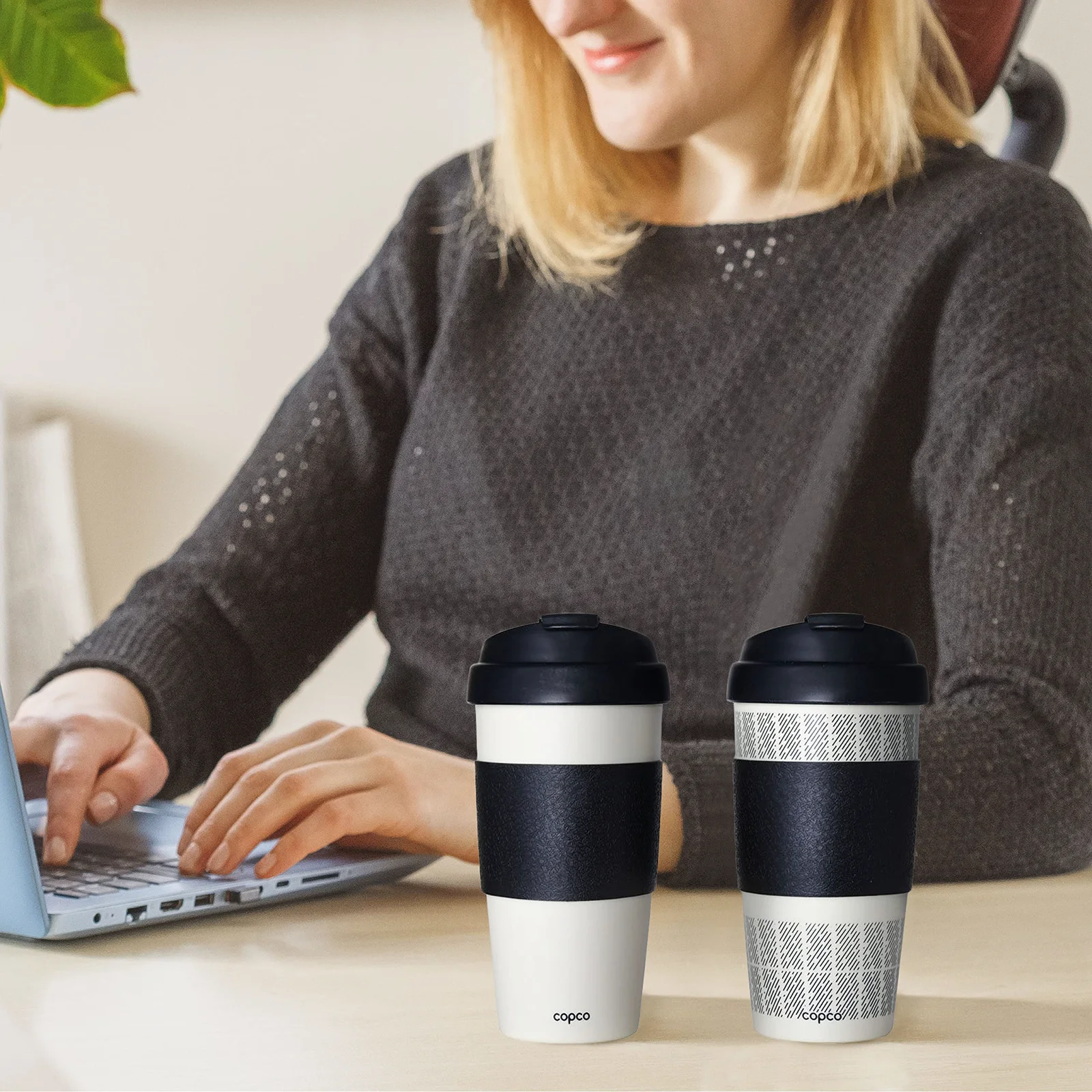
The mug that stops being used
Most commuter mugs die in the cupboard, not the car. One comes home with you, gets rinsed, and stays on the counter because the lid has too many parts or the body fears the lower rack. A few days pass and you reach for a ceramic cup instead. The travel mug sits until you need the counter, then moves to the drawer you never open. That is the end of the relationship.
The mug was not lost. Abandonment simply required less effort than washing it. A mug that has to be cleaned by hand tends to fall out of daily use quietly, without a decision ever being made, and the dishwasher ends up deciding which objects survive in a kitchen. If the mug cannot ride the cycle, it will not ride out the year. The Acadia is dishwasher safe, and the plastic body can be microwaved with the lid off. This matters more than the colour. You will not care about the hue when the mug is drying on the rack next to the cereal bowls every morning, which is exactly where you want it to be.
Why sixteen ounces
Sixteen ounces is one serious coffee: a full serving with room for milk, finished while it is still worth drinking. The Acadia, the Cone, the Iconic and the steel mug all hold this amount, and our catalog lists no other size for them. One number, printed on every card, and the question of capacity is settled before the question of colour comes up.
There is a practical detail hiding in the figure. Fill to the brim and the lid displaces the excess onto your hand; leave a little room and the seal has something to work with. You learn the gap in a week, and after that it is automatic.
Double walls, and what they do not do
The Acadia is two layers of BPA-free plastic with air between them. A double wall slows the heat leaving and keeps the outside comfortable to hold: the mug does not sweat over iced coffee in August, and it does not bite your palm in January. Your hand lands on the silicone band, which is exactly where the band is.
What a double wall does not do is stop time. It is not a vacuum flask, we do not call it one, and the price keeps that claim honest. The coffee cools to drinking temperature and keeps going. This is a mug built for a commute, not an expedition: long enough to reach the office warm, no promises about the morning meeting after that. Respect the limit and the mug serves well. Ask it to hold soup hot until dinner and you will be writing us a letter.
The quarter-turn lid
The Acadia closes with a quarter turn. Not three revolutions of a fine thread while the light turns green, but one short twist, done with the hand that is not holding the wheel. Closed, it resists a tip and a jostle.
Here is the honest part, and a customer said it better than we could: after several months of use they reported no leaks from around the lid, and then added that the drinking slot means it is not spillproof. That distinction matters to anyone who throws a mug into a bag. Upright in a bag pocket, fine. Flat in a backpack under a laptop, no. The slot that lets you drink without unscrewing anything is the same opening that rules out inversion, and no lid gets to have it both ways.
A handle changes the job
The Cone and the Iconic hold the same sixteen ounces with a lid, and add a handle. That one change reassigns the mug. A handle is for the desk, the train, the walk between buildings: places where a hand wants a grip and there is no console to park in. The lid stays, so the keyboard is safe from the classic Monday spill.
A handle also settles ownership. The sleeved Acadia is anonymous and interchangeable; a desk mug with a handle becomes one person's mug within a week, and visitors do not walk off with it as easily. One customer has kept and re-bought our travel mugs over the years, and reports losing them steadily to guests who admire the colours. We take that as a review of the colours as much as of the mugs.
Sets, and the arithmetic on the card
The Acadia sells singly and in sets of two, three and four, in more colours than we can keep in one photograph. Every set card on this site prints the per-mug price next to the set price, so the arithmetic is done before you click. A single runs about $12.49; the set of four runs about $40.90, which works out close to ten dollars a mug.
Whether the set is worth it depends on your household, not on us. Two commuters want two mugs plus a spare for washing day. A set of four supplies a family of drivers, or one person with a healthy loss rate. Buy the count that matches how your mugs actually live.
The one that is steel
There is one mug in the range that is not plastic: a 16-ounce double-wall stainless steel model with a lid. Steel changes the terms. It goes through the dishwasher without complaint, it dents rather than cracks when it meets the floor, and it wears its years on the surface. It does not go in the microwave: that reflex belongs to the plastic mugs, and it is worth unlearning before the first spark.
Choose it the way you would choose a cast-iron pan: for the long haul, at the price of a little weight. Choose the plastic Acadia for the reheat-and-carry-on loop of an ordinary commute. Both are sixteen ounces. Both survive the lower rack. The rest is temperament.
Capacity, set count and the per-mug figure stand on every card in the Copco lineup, which keeps the comparison on the page rather than in your head.
One button, the whole Copco range
Every diameter, capacity and pack count in the Copco lineup sits behind this button, with the current price beside it. Measure your shelf, check the figure on the card, and it ships from our retail partner.