The 9, 12 and 18 inch question
A turntable is bought by diameter and ruined by an inch. Here is the whole cabinet, measured: the shelf, the hinges, the door swing, and which disc fits a corner, an upper and the country under the sink.
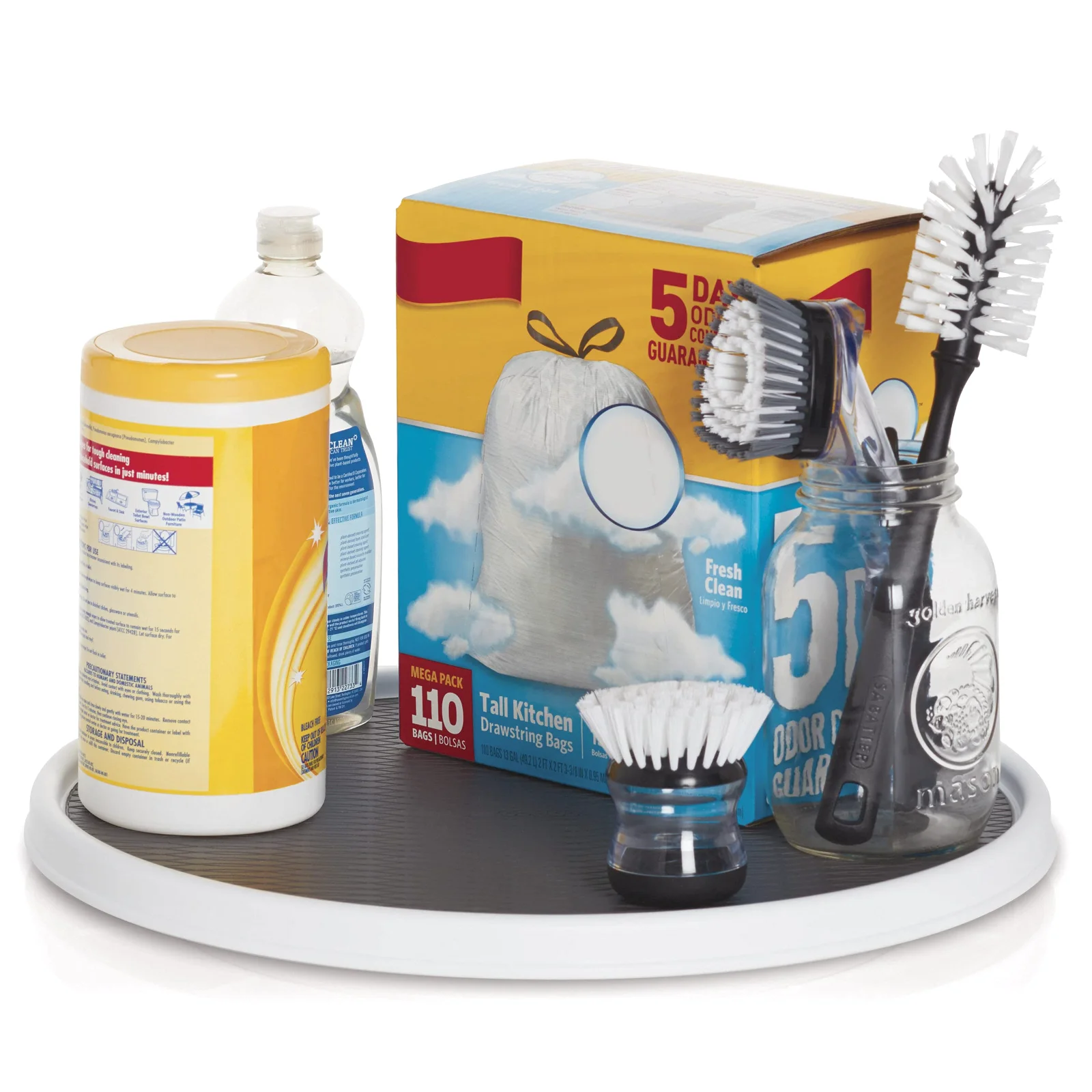
What a deep shelf does to what you own
A cabinet with deep shelves is both a promise and a problem. It offers the space to hold more than a standard cabinet, which appeals to an orderly mind. The problem begins when you need the jar of capers behind the olive oil, or the baking soda that slid behind the vinegar. What you own becomes inaccessible. Your arm becomes the primary tool for retrieval, a blunt instrument that displaces several items to reach one. This ritual rearranges the entire contents of the shelf every time you cook. A lazy susan turntable is a mechanism to solve this. It changes a cabinet from a static stack into a rotating library. The bearing between the base and the tray allows the entire inventory to be presented to you with a single turn of the wrist. Nothing gets lost in the back because there is no back. This principle is simple. The execution requires a few precise measurements before you select a diameter.
Three measurements before any diameter
The first number you need is the clear depth of the shelf. Open the cabinet door fully. Place the end of your tape measure at the back wall of the cabinet interior, not on the shelf itself. Extend the tape to the very front edge of the shelf. Record this figure. It is the most critical dimension, as it determines the maximum diameter a turntable can have and still fit on the shelf without protruding. A disc that sticks out will catch on the door or on items in adjacent cabinets.
Second, measure the width of the cabinet opening between the hinges or door frames. A turntable must be able to pass through this opening to get onto the shelf. This is a common oversight. An 18-inch disc cannot be angled through a 15-inch wide opening. The disc must travel in flat. Check the swing of the door as well. A door that only opens to a 90-degree angle may not provide enough clearance to maneuver a large tray into place, even if the width measurement seems adequate.
Third, consider the height of the space between shelves. A standard flat disc has a low profile. A two-tier model needs more vertical room. The under-sink organizer is taller still, designed to make use of the cavernous space beneath a sink basin. Always measure from the shelf you intend to use up to the bottom of the shelf above it, or to the underside of the countertop. A fraction of an inch of clearance is enough for a flat disc to spin freely. More complex models demand more air.
The corner cabinet
Corner cabinets present a unique geometry. They offer significant storage volume in a shape that is notoriously difficult to access. A lazy susan earns its keep here more than anywhere else in the kitchen. The challenge is the shape: a round tray has to fit inside a triangular floor plan, so measure the clear depth from the back corner to the opening and treat that as the ceiling on your diameter. A reviewer with a deep triangle-shaped corner cabinet reported successfully using an 18-inch model, though they had to remove the shelf to install it. They noted a version that came in two connecting pieces would have simplified the process. Our catalog does not include a two-piece model. The installation effort, however, is a one-time event for a permanent solution to the corner cabinet problem.
Under the sink
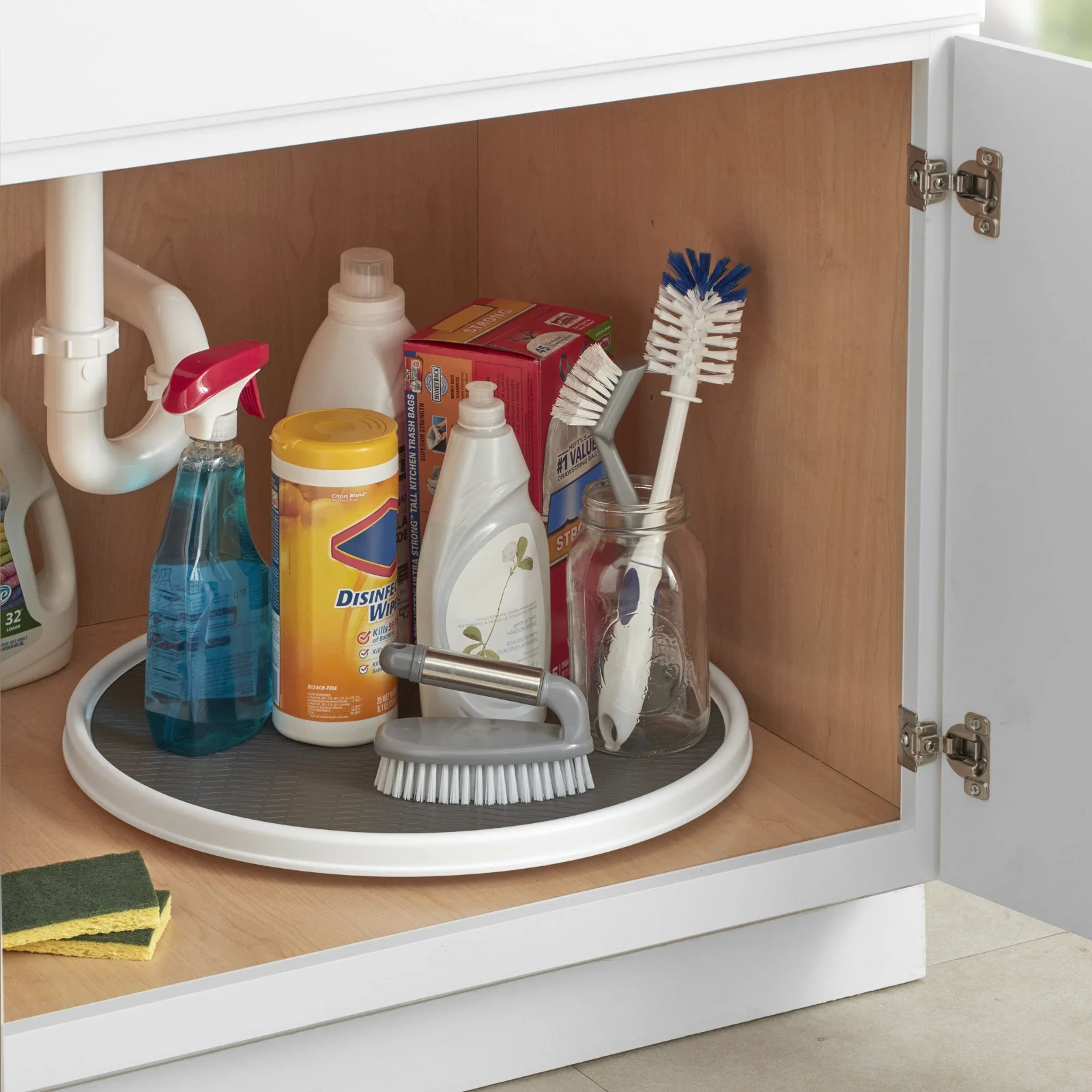
The area under a kitchen sink is a zone of peculiar dimensions. The sink basin protrudes downward, creating a high ceiling around the edges and a low ceiling in the middle. Pipes for water and drainage occupy valuable real estate. This space calls for a specialized organizer, not a standard flat disc. The revolving storage solution designed for this purpose stands 18 inches in diameter and is significantly taller than our other models. Its height puts the space along the sides of the basin to work. Available in white and gray, it is engineered to work around the plumbing obstructions that define this cabinet. It turns the most awkward storage area in the kitchen into a functional, rotating system for soaps, sponges, and cleaning supplies.
Flat disc, two tiers, or dividers
The simplest form is the flat disc. It is a single tray that rotates on its base. This is the right choice for a shelf of similarly sized items, like spices or jars of condiments. Everything remains visible and accessible. For shelves with more vertical space, a two-tier model doubles the capacity without increasing the footprint. It is ideal for stacking cans or boxes. One 12-inch model in our range features removable dividers. These partitions create sections within the turntable, preventing smaller items from sliding into a pile as the tray turns. They can be arranged or removed to suit the contents. Another option is bamboo, which we offer in a 10-inch diameter and a 35-centimeter model. The material offers a different aesthetic while performing the same fundamental task.
Where the small ones go
A 9-inch turntable seems modest, but it goes where the big discs cannot: a narrow upper shelf, a medicine cabinet, the corner of a bathroom vanity. Small jars of herbs, packets of seasoning, toiletries: anything bought small and lost in crowds. This diameter is also sold as a set of two, which allows you to address two small zones for about twelve dollars and ninety-nine cents. Their small size makes them versatile tools for corners and nooks that larger models cannot serve.
Loading it so it keeps turning
The mechanism is simple. A non-skid surface on the base keeps it planted on the shelf. The tray above turns on a bearing. Proper loading ensures this system works for years. One customer reported using the same turntable for over a decade. Another purchased theirs in 2014 and wrote a review in 2021, noting its continued performance. The key is weight distribution. Place heavier items toward the center of the tray, closer to the axis of rotation. Lighter items can go toward the perimeter. An uneven load, with all the weight on one side, will make the turntable difficult to spin and place strain on the bearing over time.
Every diameter in the Copco range prints its figure on the card, so the tape measure settles the argument before the parcel ships.
A grease film on the shelf can defeat the non-skid feet, causing the entire unit to wander when you try to turn the tray. A quick wipe of the shelf with a damp cloth before placement solves this: the base needs honest friction to stay planted. Prices in our current catalog for these rotating organizers range from about nine dollars and fifty-four cents for a single 9-inch model to about twenty-seven dollars and ninety-five cents for the 18-inch under-sink unit. The correct diameter, determined by your three measurements, is the one that disappears into the routine of your kitchen, turning a problem of access into a solved equation.
One button, the whole Copco range
Every diameter, capacity and pack count in the Copco shelves sits behind this button, with the current price beside it. Measure your shelf, check the figure on the card, and it ships from our retail partner.